
What Is a Tear Break-Up Time?
If you’ve ever been told you have dry eye disease, your eye doctor may have measured something called your tear break-up time (TBUT). While the name sounds technical, it’s actually a simple test that provides valuable information about the health and stability of your tears.
Understanding Your Tear Film
Every time you blink, a thin layer of tears spreads across the surface of your eye. This tear film helps:
- Keep your eyes comfortable
- Maintain clear vision
- Protect against irritation and infection
- Nourish the front surface of the eye
A healthy tear film should remain smooth and stable between blinks. When it breaks apart too quickly, dry spots develop on the eye’s surface, often leading to irritation and fluctuating vision.
What Is Tear Break-Up Time?
Tear break-up time measures how long your tears remain stable after a blink.
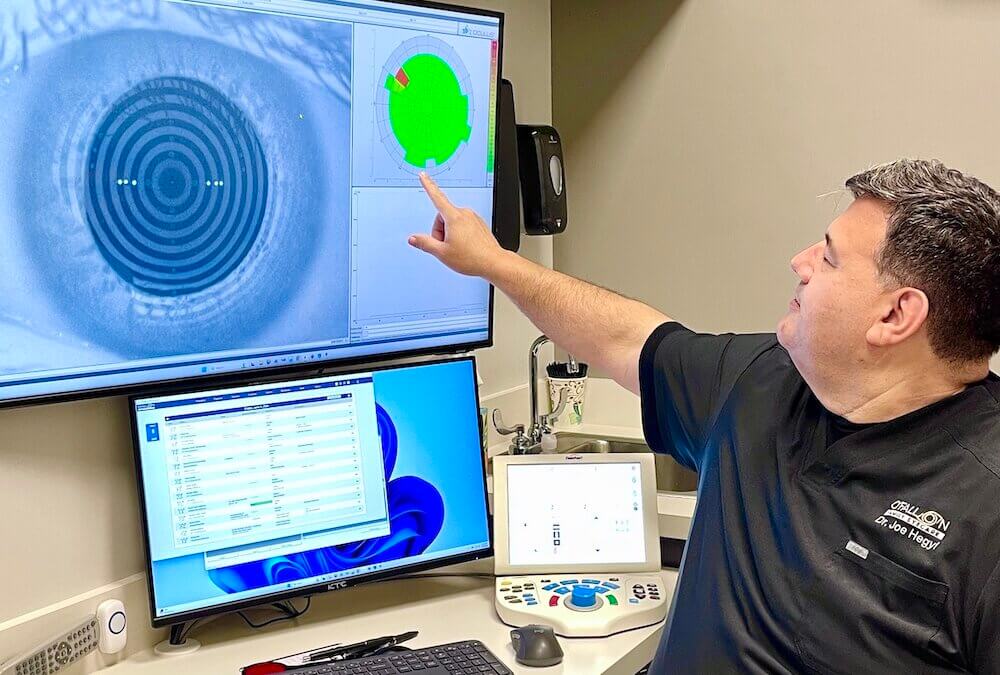
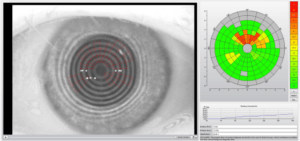
During the test, your doctor will ask you to blink and then keep your eyes open. Using specialized equipment, we watch the tear film and measure the number of seconds before the first dry spot appears.
In general:
- 10 seconds or longer: Usually considered normal
- Less than 10 seconds: May indicate tear film instability
- Less than 5 seconds: Often associated with moderate to severe dry eye disease
The shorter the tear break-up time, the faster your tears are evaporating or becoming unstable.
Why Is Tear Break-Up Time Important?
Many patients think dry eye simply means they don’t make enough tears. In reality, many dry eye sufferers produce plenty of tears—they just don’t have healthy tears.
An unstable tear film can cause symptoms such as:
- Burning or stinging
- Grittiness or a sandy sensation
- Fluctuating vision
- Excessive tearing
- Eye fatigue
- Difficulty using digital devices
- Contact lens discomfort
Measuring tear break-up time helps us determine whether poor tear quality is contributing to these symptoms.
What Causes a Short Tear Break-Up Time?
Several factors can cause tears to break apart too quickly:
- Meibomian Gland Dysfunction (MGD) –The meibomian glands in your eyelids produce the oily layer of your tears. This oil slows evaporation and helps keep the tear film stable. When these glands become blocked or unhealthy, tears evaporate much faster.
- Ocular Rosacea – Rosacea doesn’t only affect the skin—it can also affect the eyelids and meibomian glands, leading to chronic tear instability.
- Excessive Screen Time – When we use computers, tablets, and smartphones, we blink less frequently. This allows tears to evaporate more quickly and can worsen dry eye symptoms.
- Aging – As we get older, tear quality often declines, increasing the risk of dry eye disease.
- Contact Lens Wear – Contact lenses can disrupt the tear film and may contribute to faster tear evaporation in some patients.
How Is Tear Break-Up Time Measured?
Traditionally, tear break-up time was measured using a yellow dye called fluorescein.
Today, advanced technology allows us to measure tear stability without touching the eye. At O’Fallon Family Eyecare, we use specialized dry eye diagnostic equipment to evaluate tear film stability and gather objective measurements that help guide treatment recommendations.
These measurements allow us to monitor your progress over time and determine whether treatments are improving your tear quality.
Can Tear Break-Up Time Be Improved?
Yes. In many cases, tear break-up time improves when the underlying cause of dry eye is treated.
Treatment options may include:
- Artificial tears
- Warm compresses
- Lid hygiene treatments
- Omega-3 supplementation
- Prescription dry eye medications
- Intense Pulsed Light (IPL) therapy
- Meibomian gland treatments
- Lifestyle and environmental modifications
The best treatment depends on the specific cause of your tear film instability.
The Bottom Line
Tear break-up time is one of the most important measurements we use to evaluate dry eye disease. It tells us how stable your tears are and helps identify problems that may be causing irritation, fluctuating vision, or discomfort.
If your eyes frequently feel dry, tired, watery, or irritated, a comprehensive dry eye evaluation can help uncover the cause and identify treatment options that provide lasting relief.
Schedule a Dry Eye Evaluation
At O’Fallon Family Eyecare, we use advanced dry eye testing to evaluate tear film stability, meibomian gland health, and other factors that contribute to dry eye symptoms. If you’re experiencing chronic eye irritation or fluctuating vision, schedule an appointment to learn what’s causing your symptoms and how we can help.
Recent Comments