
Atropine for Myopia Control

Atropine Treatment
If your child’s eyes are changing quickly and they need a stronger glasses prescription year after year, it can feel incredibly frustrating. You want to protect their eyesight, but standard glasses only correct how they see today—they do not stop the underlying problem from worsening.
Fortunately, you have choices beyond simply changing their lenses. Low-dose atropine eye drops offer a clinically proven, non-invasive way to slow down the progression of childhood nearsightedness (myopia) with just a single drop before bed.

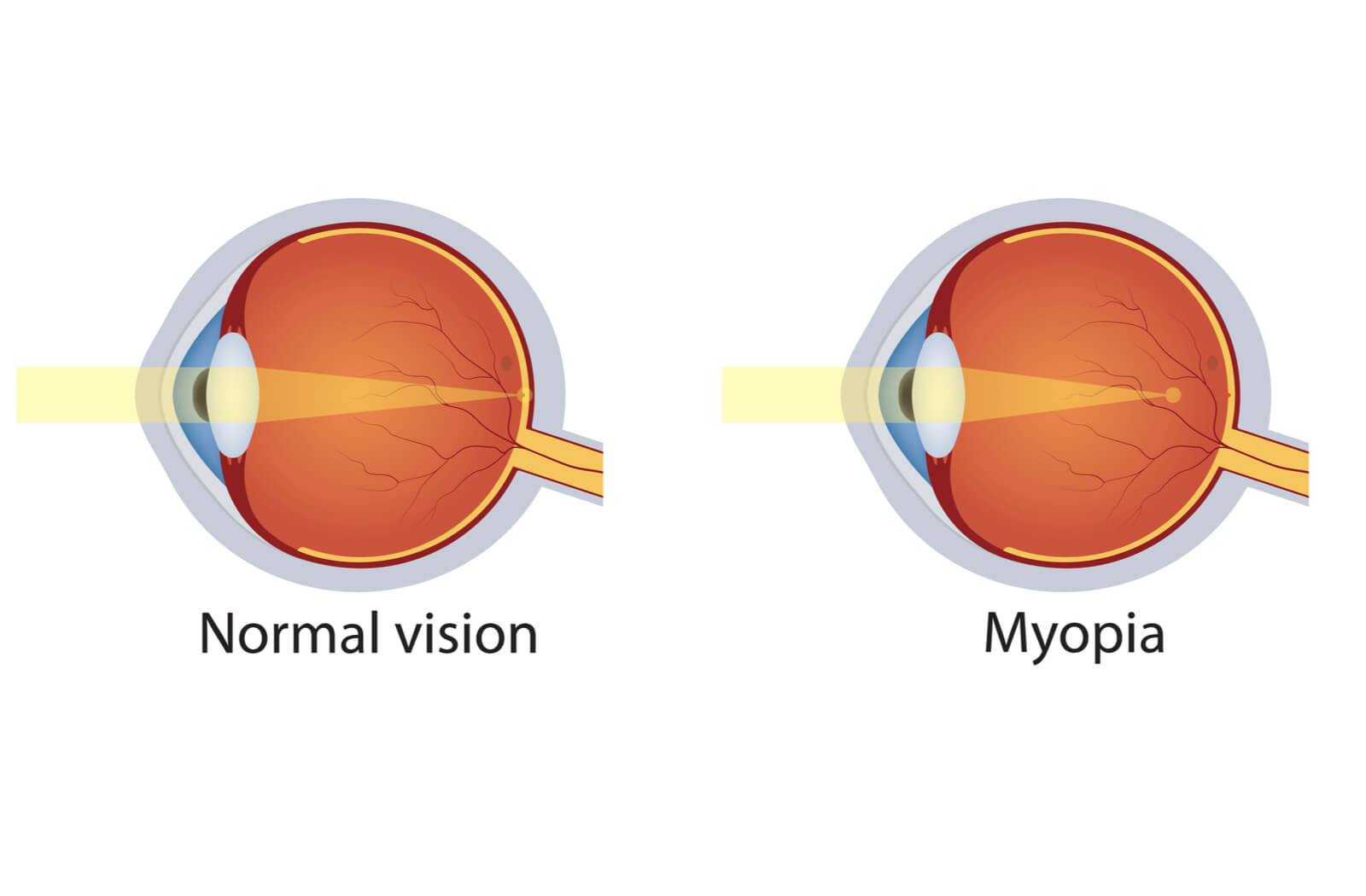
What is Myopia and Why Should We Slow It?
When a child has myopia, their eyeball is growing just a little too long from front to back—a process called axial elongation.
Instead of light focusing perfectly on the retina (the back of the eye), it falls short, making distance vision blurry. As your child grows, their eyes continue to elongate, leading to a heavier reliance on thicker lenses.
Why early management matters: Progression isn’t just about the inconvenience of stronger glasses. Rapidly lengthening eyes stretch the delicate tissue at the back of the eye. Managing myopia early helps protect your child from developing severe vision complications later in life, such as retinal detachment, glaucoma, and macular degeneration.
How Atropine Treatment Works
Ultra-diluted, low-dose formulations of Atropine are incredibly effective at signaling the eye to slow down its rapid growth, without the unwanted visual side effects of the stronger dose.
- One Drop at Bedtime:Every night.
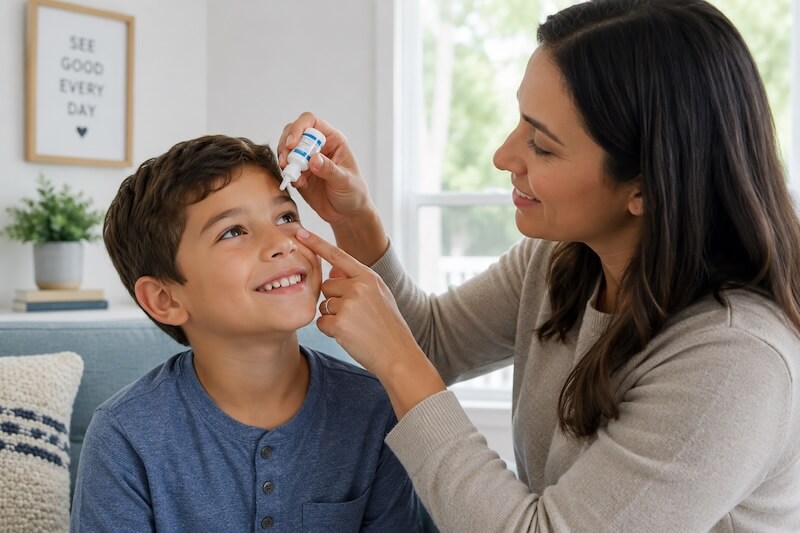
You administer just one drop into each of your child’s eyes right before sleep. Nighttime dosing ensures the medicine absorbs while they sleep, avoiding any daytime interference.
- Wear Normal Glasses or Contacts During the Day:Every morning.
The drops do not temporarily “fix” vision. Your child will still wear their current daytime glasses or contacts to see clearly at school and play.
- Continuous Micro-Targeting:Behind the scenes.
While your child sleeps, the low-dose solution gently interacts with receptors in the retina and sclera (the white outer wall of the eye), subtly messaging the eyeball to pace its structural growth.
- Semi-Annual Progress Monitoring:Every 6 months.
We bring your child back twice a year to track their prescription changes and use advanced imaging to measure their axial length to ensure the treatment is working effectively.
Are There Side Effects of Atropine?
Understandably, putting a medicated drop into your child’s eyes every night sounds daunting. However, low-dose atropine is celebrated for its incredibly high safety and comfort profile.
Because the solution is diluted up to 99% compared to traditional diagnostic drops, complications are minimal:
- Mild Light Sensitivity: A tiny fraction of children might notice slight brightness on sunny days because the drop slightly relaxes the pupil. This is easily solved with a pair of sunglasses or transition lenses.
- Mild Near-Blur: A very small percentage of children may experience minor blurring when reading fine print up close. If this occurs, it can be seamlessly corrected with a mild reading prescription or multifocal lenses.
- Highly Tolerable: The vast majority of children experience absolutely zero noticeable side effects and quickly integrate the drops into their brushing-and-bedtime routine.
Myopia Measured, Not Guessed.
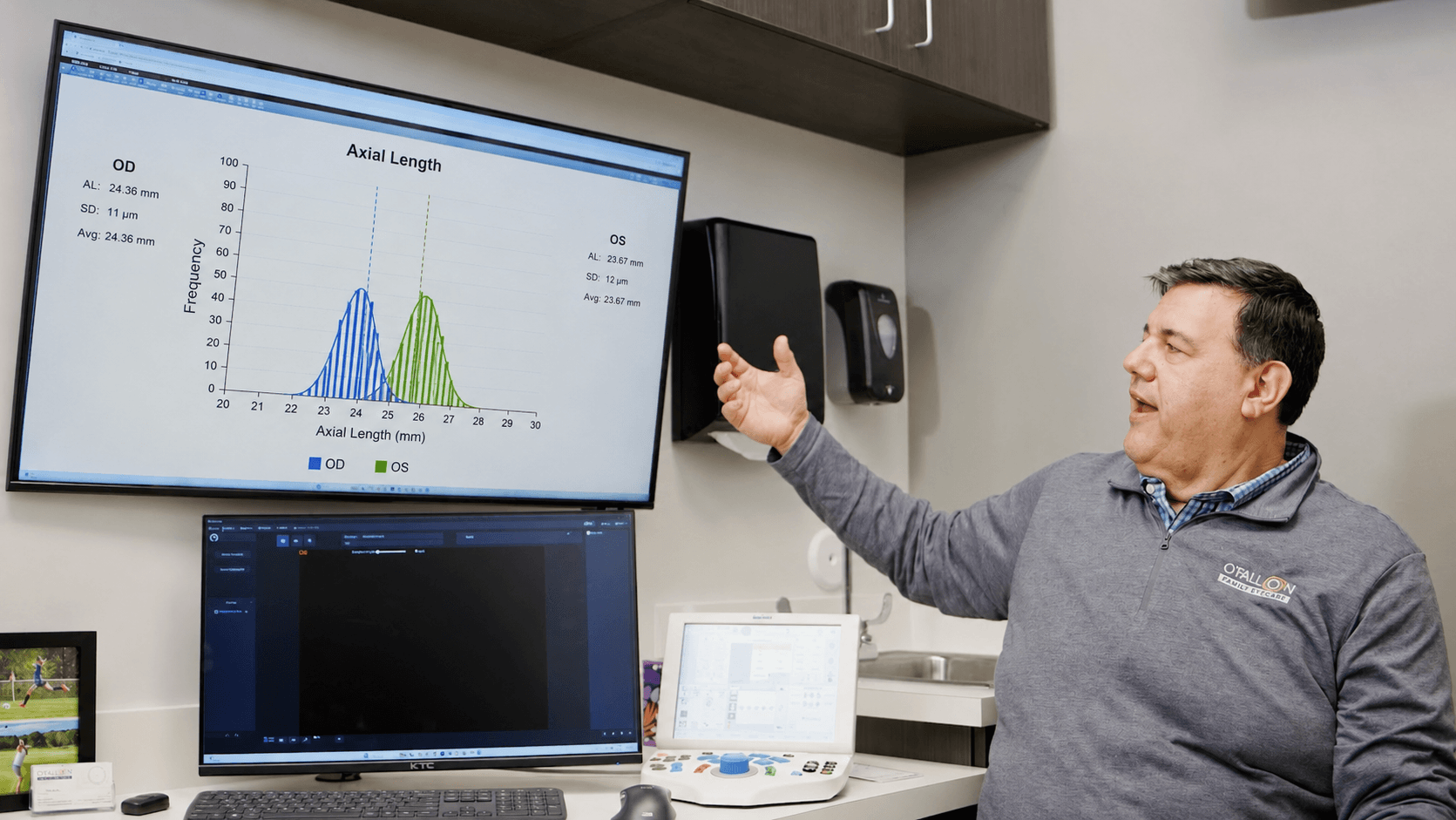
Slowing myopia starts with measuring it accurately. At O’Fallon Family Eyecare, we monitor not only your child’s glasses prescription, but also the physical growth of the eye using advanced axial length measurements.
Because myopia is caused by the eye growing too long, tracking axial length gives us a more complete picture than prescription changes alone. This allows us to detect progression earlier, monitor your child’s risk over time, and evaluate how well treatment is working so we can make informed decisions about their care.
By combining prescription measurements with axial length tracking, we can personalize treatment and help protect your child’s vision for the future.
Give Your Child Clear Vision and a Healthier Future
Why Families Choose O’Fallon Family Eyecare
Personal Experience – Our doctors don’t just look at numbers on a chart—they treat your child with a deep, personal understanding of what it’s like to walk in their shoes, bringing unmatched passion and empathy to your child’s care.
High Tech Care – We measure eye growth directly using advanced axial length technology, allowing us to track myopia progression with precision rather than relying solely on prescription changes.
Proven Treatments – Instead of pushing a one-size-fits-all product, we offer a versatile Myopia Management Program featuring multiple evidence-based paths.

Drs. Joe and Laura Hegyi
Whether your child is best suited for soft lenses like MiSight®, custom overnight lenses via Ortho-K, advanced Stellest lenses or Low-Dose Atropine Eye Drops, we tailor the treatment plan to fit seamlessly into your family’s actual lifestyle.
Frequently Asked Questions
Can my child stop wearing their glasses once they start atropine?
No. Atropine drops do not cure or reverse existing nearsightedness; their job is to act as a shield to keep the prescription from getting worse. Your child will still need to wear their glasses or daytime contacts to see clearly.
How long does the treatment last?
Myopia typically progresses most rapidly during school-age growth spurts. Most children remain on low-dose atropine drops for at least 2 to 3 years, or until their eye growth naturally stabilizes in their mid-to-late teens.
Where do I get low-dose atropine drops?
Because these ultra-low concentrations (like 0.05% or 0.01%) are highly specialized, they are either prescribed as a proprietary, preservative-free formula or fulfilled by a certified compounding pharmacy. Our clinic takes care of tailoring the exact concentration and coordinating the prescription directly for you.
What happens if we stop treatment?
If atropine is stopped too early, some children may experience a faster progression of myopia again. We usually recommend tapering or discontinuing treatment only after your child’s eye growth has slowed, based on their age and axial length measurements.
Will my child need follow-up visits?
Yes. Regular follow-up appointments are an important part of treatment. We typically monitor your child’s vision, prescription, and axial eye length every 6–12 months to ensure the treatment is working as expected.
Can atropine be used with glasses or contact lenses?
Absolutely. Most children continue wearing their glasses or contact lenses while using atropine. The drops work to slow eye growth, while glasses or contacts provide clear vision.