Clear Vision All Day. No Glasses Required

What Is Orthokeratology?
Orthokeratology, often called Ortho-K, is a non-surgical treatment that uses custom-designed contact lenses to help slow the progression of myopia in children and teens. It is one of four types of treatments (others include Stellest, MiSight, and Atropine) used by eye doctors to control myopia.
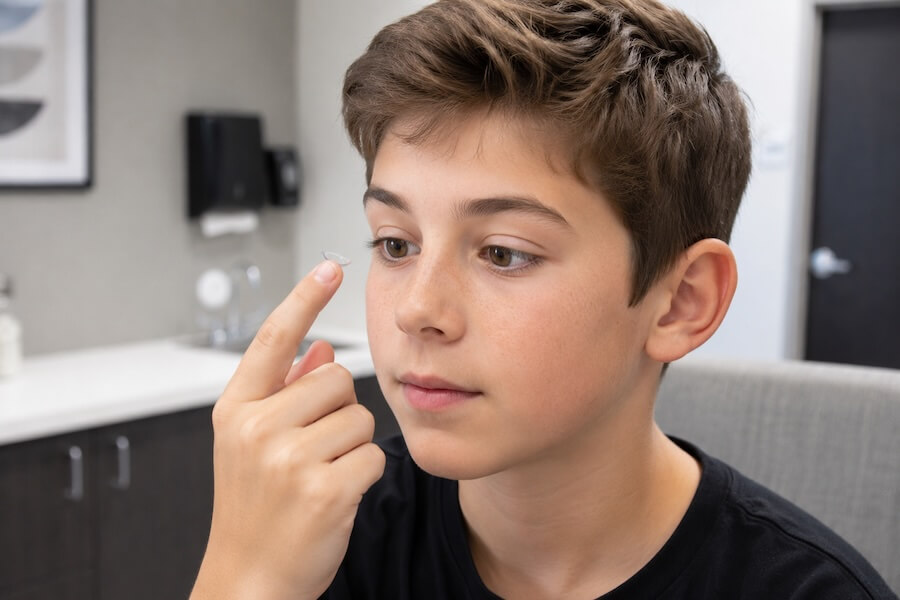
While your child sleeps in ortho-k lenses, they gently reshape the cornea. After removing the lenses in the morning, light focuses properly on the retina, providing clear daytime vision. The effect is temporary, so the lenses must be worn regularly to maintain results.
In addition to providing clear daytime vision, orthokeratology has been shown to help slow myopia progression in many children. Researchers believe the unique way ortho-k reshapes the eye’s focusing system sends signals that help reduce the excessive eye growth associated with worsening nearsightedness.

How Do Ortho-K Lenses Work?
By temporarily reshaping the cornea, the specialized design of the ortho-k lens changes where light focuses in the back of the eye, improving vision and helping create the optical effect used in myopia management. During the night, the lenses gently reshape the front surface of the eye (the cornea), allowing light to focus more clearly on the retina.
When the lenses are removed in the morning, the temporary reshaping effect remains, providing clear vision throughout the day without the need for glasses or daytime contact lenses.
Unlike laser vision correction, ortho-k does not permanently change the eye. The effect is completely reversible and is maintained through regular overnight lens wear.
In addition to improving vision, orthokeratology has been shown to help slow the progression of myopia in many children. Researchers believe the unique way ortho-k changes how light is focused on the retina helps reduce the excessive eye growth associated with worsening nearsightedness.
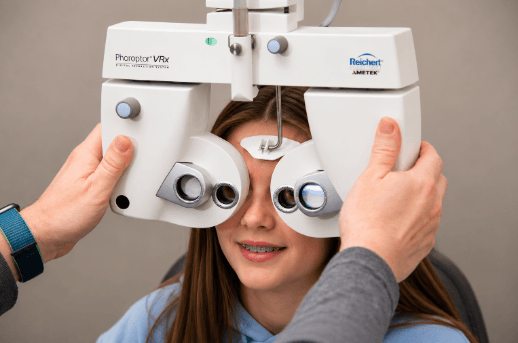
At O’Fallon Family Eye Care, we use advanced corneal topography and axial length measurements to customize treatment and monitor your child’s progress over time.
Is Orthokeratology Right for My Child?
Orthokeratology can be an excellent option for many children and teens, especially those whose nearsightedness is continuing to progress. Your child may be a good candidate if they:
- Need stronger glasses every year
Frequent prescription changes may be a sign that the eye is continuing to grow. Orthokeratology is often used as part of a myopia management program to help slow progression. - Want freedom from daytime glasses or contact lenses
Because ortho-k lenses are worn only while sleeping, many children enjoy clear vision throughout the day without needing glasses or contact lenses. - Participate in sports or other activities
Ortho-k can be a great option for children involved in soccer, baseball, basketball, dance, gymnastics, swimming, and other activities where glasses may be inconvenient. - Have one or both parents who are nearsighted
Family history can increase the risk of progressive myopia. Early intervention may help reduce the amount of myopia that develops over time. - Are motivated and supported by their family Successful ortho-k treatment requires consistent lens wear and proper lens care. Children who are responsible and have supportive parents often do very well.
Why Families Love Ortho-K
For many families, Orthokeratology (Ortho-K) is the ultimate lifestyle choice because it offers complete freedom during the day. Kids enjoy crisp, clear vision all day long—with absolutely no need for glasses or daytime contact lenses. This makes Ortho-K a favorite for highly active kids, swimmers, and athletes who don’t want to worry about glasses breaking or contact lenses drying out during sports. Parents also love Ortho-K because the entire treatment happens safely at home under their direct supervision, eliminating the worry of a child losing a lens at school or inserting them with unwashed hands during recess.
Measured, Not Guessed.
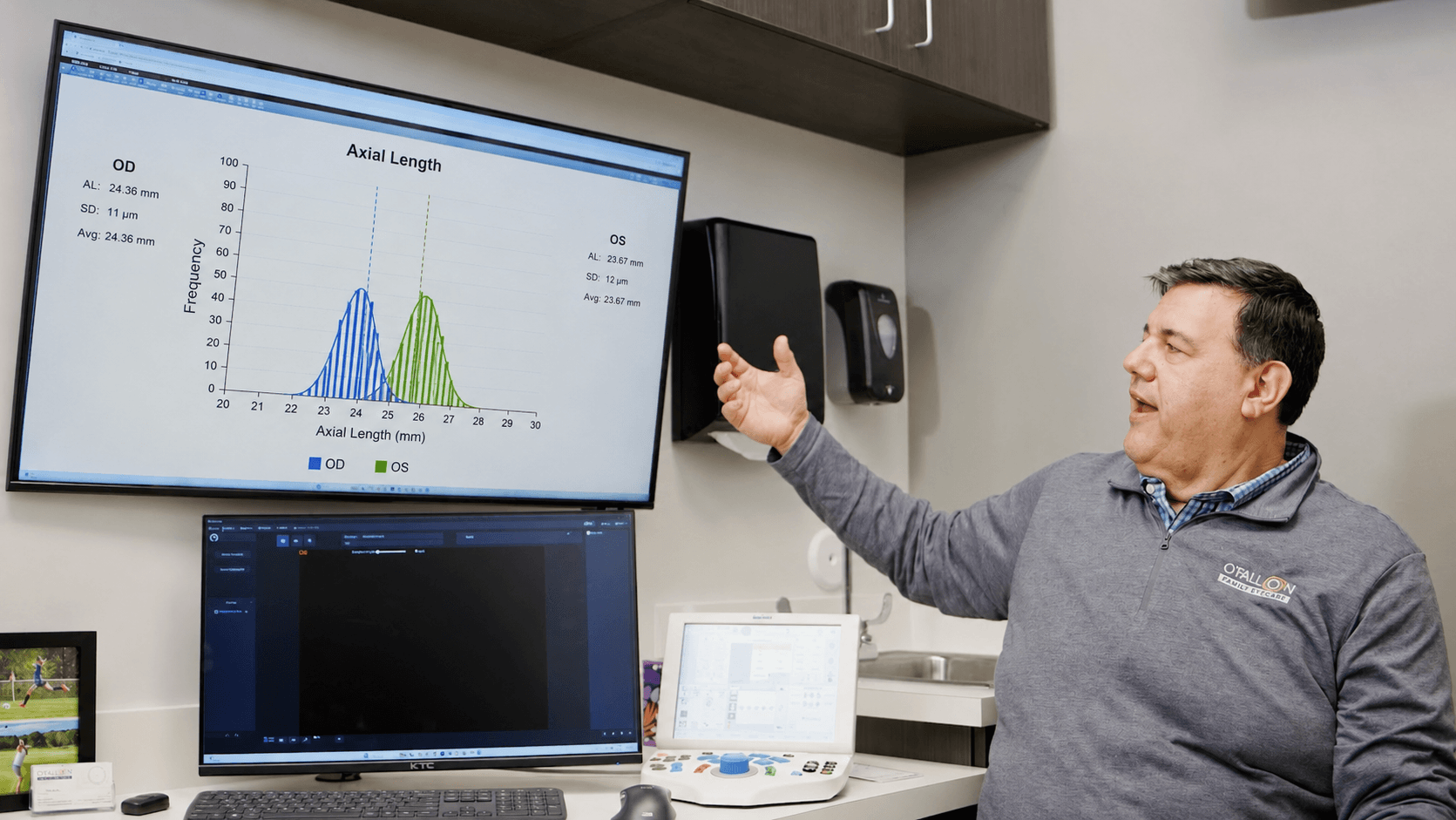
Slowing myopia starts with measuring it accurately. At O’Fallon Family Eyecare, we monitor not only your child’s glasses prescription, but also the physical growth of the eye using advanced axial length measurements.
Because myopia is caused by the eye growing too long, tracking axial length gives us a more complete picture than prescription changes alone. This allows us to detect progression earlier, monitor your child’s risk over time, and evaluate how well treatment is working so we can make informed decisions about their care.
By combining prescription measurements with axial length tracking, we can personalize treatment and help protect your child’s vision for the future.
Give Your Child Clear Vision and a Healthier Future
Why Families Choose O’Fallon Family Eyecare
Personal Experience – Our doctors don’t just look at numbers on a chart—they treat your child with a deep, personal understanding of what it’s like to walk in their shoes, bringing unmatched passion and empathy to your child’s care.
High Tech Care – We measure eye growth directly using advanced axial length technology, allowing us to track myopia progression with precision rather than relying solely on prescription changes.
Proven Treatments – Instead of pushing a one-size-fits-all product, we offer a versatile Myopia Management Program featuring multiple evidence-based paths.
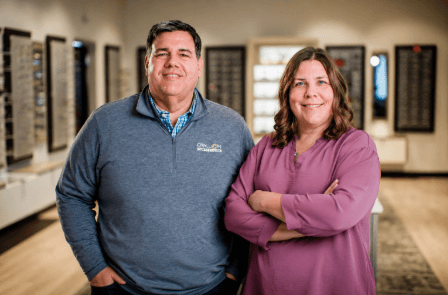
Drs. Joe and Laura Hegyi
Whether your child is best suited for soft lenses like MiSight®, custom overnight lenses via Ortho-K, advanced Stellest lenses or Low-Dose Atropine Eye Drops, we tailor the treatment plan to fit seamlessly into your family’s actual lifestyle.
Frequently Asked Questions
Is my child too young for Ortho-k?
Probably not. Age alone is rarely the deciding factor when determining whether a child is a good candidate for orthokeratology.
Many children successfully wear ortho-k lenses beginning around ages 8–12, and some younger children may also be excellent candidates. In most cases, a child’s maturity, motivation, and family support are more important than their age.
Because ortho-k lenses are worn overnight and removed in the morning, many children find them easier to manage than traditional daytime contact lenses. Parents are often surprised by how quickly their child adapts to the routine.
During your child’s evaluation, we will assess factors such as age, prescription, eye health, and readiness for lens wear to determine whether ortho-k is an appropriate option. If orthokeratology is not the best fit, other myopia management treatments may be available.
Are overnight lenses safe?
Yes. Orthokeratology has been used around the world for many years and is considered a safe treatment option when lenses are properly fit, cared for, and worn as directed.
Like any contact lens, Ortho-k lenses carry a small risk of complications, including eye infections. However, these risks can be minimized through proper hygiene, regular follow-up visits, and careful adherence to lens care instructions.
At O’Fallon Family Eye Care, we provide detailed training on lens insertion, removal, cleaning, and storage. We also monitor your child’s eye health and treatment progress at regular follow-up visits to help ensure the lenses continue to fit and perform as intended.
For many families, the benefits of clear daytime vision and slowing myopia progression outweigh the relatively small risks associated with contact lens wear. During your consultation, we will discuss both the benefits and risks so you can make an informed decision about your child’s care.
Will my child feel the lenses while sleeping?
Most children adapt to orthokeratology lenses very quickly. Because the lenses rest on the surface of the eye, it is normal to be aware of them when first putting them in at bedtime or after waking up in the morning.
Once the eyes are closed and your child falls asleep, most children are not bothered by the lenses and quickly become accustomed to wearing them. In fact, many children report that after the first few nights they hardly notice the lenses at all.
The first week of wear is typically an adjustment period, but most children adapt surprisingly well and find the routine becomes just another part of their bedtime routine.
If a lens ever becomes uncomfortable, our team is available to evaluate the fit and make any necessary adjustments.
How quickly does vision improve?
Many children notice an improvement in their vision after just the first night of wearing ortho-k lenses. However, achieving the full treatment effect is a gradual process.
Most children experience significant improvement within the first few days, with vision continuing to sharpen over the first one to two weeks as the cornea responds to treatment. During this time, some children may still need glasses for certain activities or notice fluctuations in their vision throughout the day.
We schedule follow-up visits during the early stages of treatment to monitor progress and ensure the lenses are working as intended. As treatment stabilizes, most children enjoy clear vision throughout the day without glasses or contact lenses.
Because every eye responds differently, the exact timeline varies from child to child, but many families are pleasantly surprised by how quickly improvements occur.
Can ortho-k permanently cure myopia?
No. Orthokeratology does not permanently cure myopia or eliminate the need for treatment.
Ortho-k works by gently reshaping the front surface of the eye while your child sleeps. The effect is temporary, which is why the lenses must be worn regularly to maintain clear daytime vision. If lens wear is discontinued, the cornea gradually returns to its original shape and the nearsightedness returns.
The goal of ortho-k is not to cure myopia, but to help slow its progression during childhood and adolescence when the eyes are still growing. By reducing excessive eye growth, ortho-k may help your child develop less myopia than they would have without treatment.
For many families, the greatest benefit is not simply seeing clearly without glasses during the day, but helping to protect long-term eye health by managing myopia during the years when progression is most likely to occur.
Does insurance help cover ortho-k?
Many vision insurance plans provide benefits that can help reduce the overall cost of orthokeratology treatment. In some cases, vision plan benefits may be applied toward the contact lenses themselves, lowering the cost of the lens materials.
The specialized professional services involved in ortho-k—including lens fitting, corneal topography, treatment planning, and follow-up care—are often not covered by vision insurance and may require separate fees.
Because insurance benefits vary widely between plans, our team will review your available benefits and explain how they may apply to your treatment before getting started. We want families to understand their options and feel confident about the investment they are making in their child’s vision and eye health.